
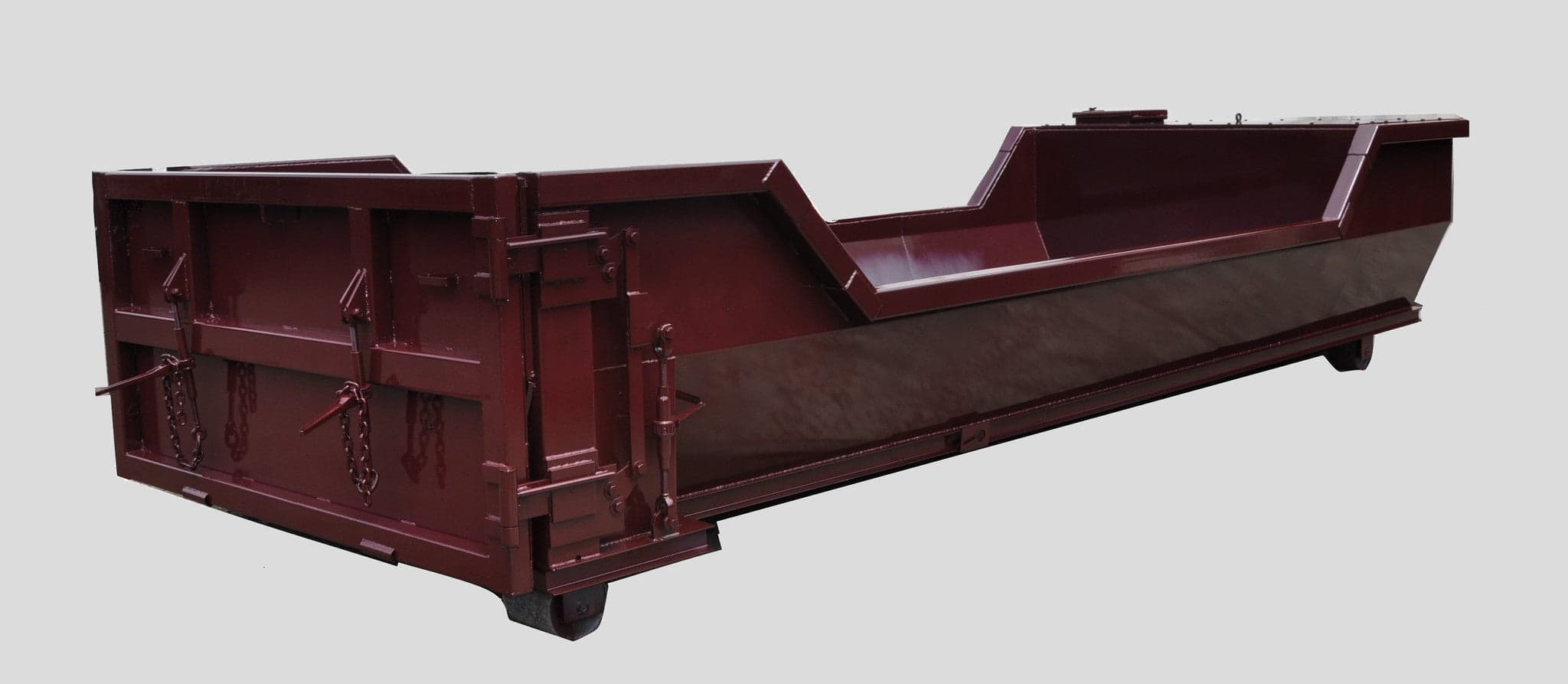
Concrete Washout Container
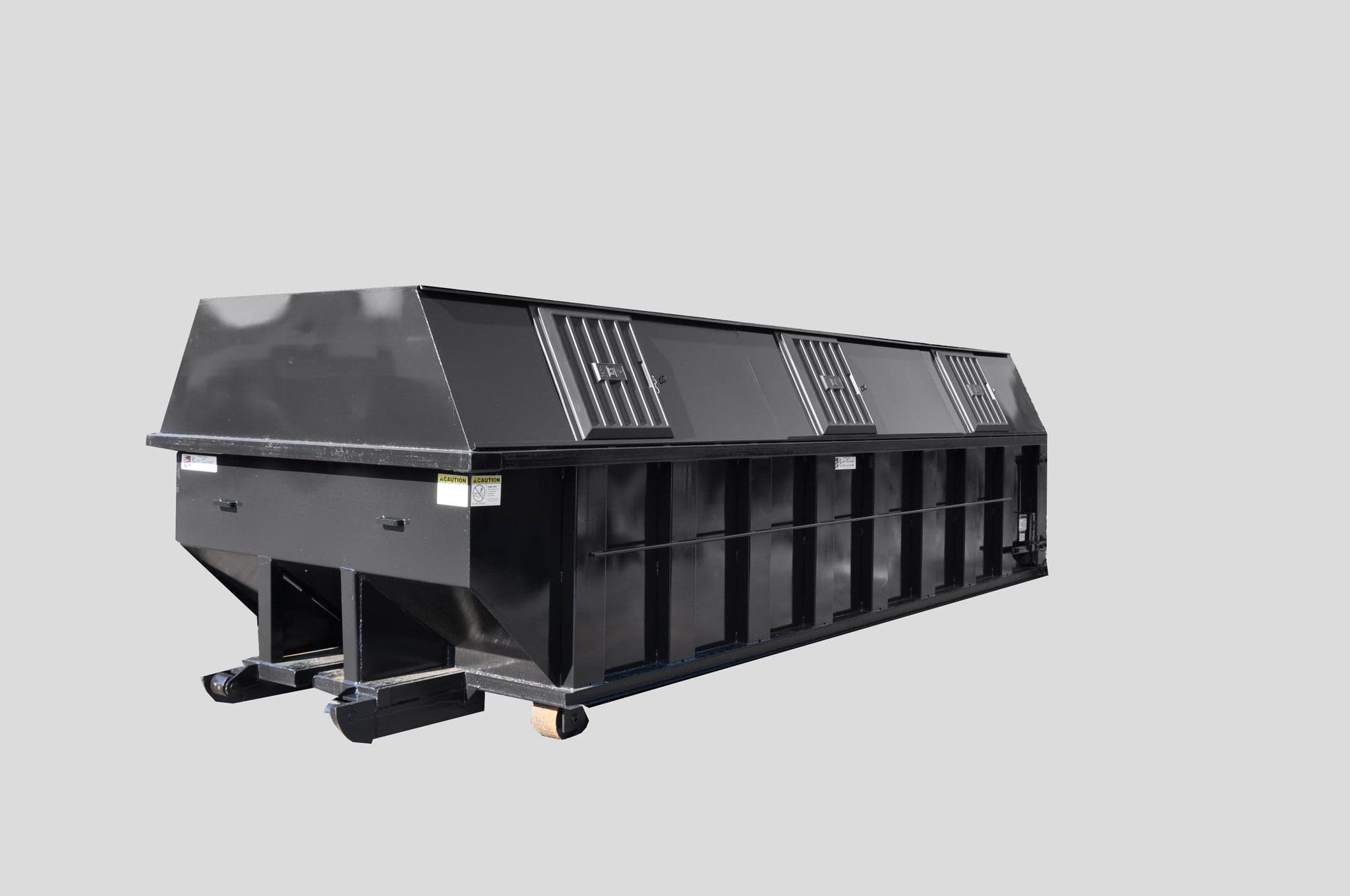
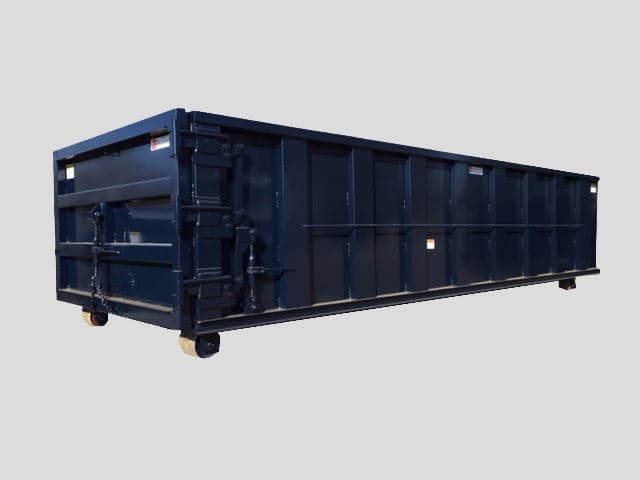
Concrete washout containers built for ready-mix plants, general contractors, and EPA stormwater compliance. The release agent-compatible interior liner prevents concrete from permanently bonding to the walls, and a sloped floor directs liquid toward a screened drain port that separates solids from washout water. A reinforced floor handles the extreme weight of cured concrete -- a 20-yard model can hold several tons of hardened material. Available in 5, 10, 15, and 20 cubic yard sizes, and can be built watertight on request. Cable roll-off compatible. Built in Brooklyn since 1946. Whatever you need, we can make it -- call (718) 497-4431.
Key Features
- Purpose-built for concrete and cement washout operations
- Available in 5, 10, 15, and 20 cubic yard sizes
- Can be built watertight for sites with strict containment requirements
- Release agent-compatible interior liner prevents bonding
- Reinforced floor handles extreme weight of cured concrete
- Sloped floor directs liquid toward screened drain port
- Separates solids from washout water for EPA compliance
- Supports stormwater management requirements
- Cable roll-off compatible
- Available with secondary containment berm option
- Custom builds available -- whatever you need, we can make it
- Essential for ready-mix plants and active construction sites
Available Sizes
Specifications
Concrete washout containers are purpose-built for construction sites, ready-mix plants, and concrete pump operators that need to contain washout water and excess concrete in compliance with EPA stormwater requirements. Cooper Tank fabricates concrete washout containers at our Brooklyn facility in 10, 15, and 20 cubic yard sizes. Every container includes a release agent-compatible interior liner, reinforced sloped floor, and screened drain port.
What Is a Concrete Washout Container?
A concrete washout container is a heavy-duty roll-off bin designed to receive excess concrete, cement, slurry, and cement truck washout water on active construction sites. The container holds the waste on site until it cures into a solid mass that can be hauled out cleanly, keeping wet concrete and high-pH water from running off into storm drains or surrounding soil. For most general contractors, ready-mix plants, and large public works projects, a dedicated concrete washout container is the simplest way to meet EPA stormwater discharge requirements and local construction site BMP (Best Management Practice) rules.
Concrete Washout Container Sizes
We build four standard sizes, all cable roll-off compatible: 5 cubic yards: a common size for tight residential jobs, small pours, and contractors who need a compact washout that fits in limited site space. 10 cubic yards: best for small to mid-size contractor jobs and single-pour cleanup. 15 cubic yards: standard for mid-scale residential and multi-day commercial pours. 20 cubic yards: the production choice for ready-mix plants, large infrastructure projects, and multi-pump pours. For sites with strict containment requirements, the washout container can be built watertight. Custom sizes and configurations available -- whatever you need, we can make it. The rule of thumb for sizing: estimate your total concrete waste volume across the cycle between haul-offs, then add 25 percent for water.
Why a Steel Washout Container Beats a Pit or Plastic Bag
Plywood-and-plastic washout pits and disposable plastic liner bags are common on smaller jobs, but they leak, tear, and fail inspection more often than contractors expect. A steel concrete specialty container is purpose-built for the job: it will not leak because of welded steel construction and a sloped reinforced floor; it will not tear under the weight of cured concrete (several tons in a 20-yard size); it will not blow away; it is reusable once the concrete cures and is removed; and it is inspector-ready because it is visibly engineered for the purpose, reducing EPA stormwater citation risk.
Key Features
Release agent-compatible interior liner prevents cured concrete from permanently bonding to the walls so the container can be cleaned and redeployed. Reinforced sloped floor handles the dead weight of cured concrete -- a 20-yard load can hold several tons of hardened material. Screened drain port separates solids from washout water for proper disposal. Cable roll-off compatible with any standard roll-off truck. Secondary containment berm option available for sites that require zero discharge or operate near sensitive watersheds. Industrial enamel exterior in safety colors, with custom branding available for fleet identification at ready-mix plants.
EPA Stormwater Compliance and Concrete Washout
Under the EPA Construction General Permit and most state-level stormwater rules, contractors are required to designate a washout area on every active job site, contain all concrete waste including wash water and slurry, prevent discharge to storm drains and surface water, maintain the washout so it does not overflow or fail, and dispose of cured material through approved channels. A purpose-built concrete washout container handles the containment requirements by design. You can drop it on the jobsite, mark it as the designated washout area, and have a defensible BMP in place for any inspection.
Who Uses Concrete Washout Containers
Ready-mix concrete plants: dedicated yard washout for truck cleanouts between deliveries. General contractors on commercial, residential, and infrastructure projects requiring stormwater compliance. DOT and public works projects where stormwater compliance is contractually required. Concrete pump truck operators for pump cleanout between pours. Precast concrete shops for daily form and mixer cleanout. Site work and excavation contractors handling concrete demolition.
Frequently Asked Questions
How does a concrete washout container work?
The truck operator washes residual concrete and slurry into the container. The screened drain separates water from solids. The water evaporates or is hauled off for treatment. The solid concrete cures inside the container, then the whole container is rolled off to the disposal site or busted out and redeployed.
Can a concrete washout container be reused?
Yes. The release agent-compatible interior liner is designed for repeated use. Once cured concrete is removed, the container is ready for the next job.
What size concrete washout container do I need?
For a single pour or small contractor job, a 10-yard works. For ongoing commercial or ready-mix plant use, 20 yards is standard. The rule of thumb: estimate your total concrete waste volume across the cycle between haul-offs, then add 25 percent for water.
Are concrete washout containers EPA compliant?
A concrete washout container is one piece of an EPA-compliant stormwater plan. Used correctly with a designated washout area, signage, and proper disposal of cured material, it satisfies the containment requirements under the EPA Construction General Permit and most state stormwater programs.
What is a concrete specialty container?
A concrete specialty container is a purpose-built roll-off container engineered for concrete and cement waste handling -- including washout water, slurry, and excess concrete from pours and pump cleanouts. Unlike a standard dumpster, concrete specialty containers include a reinforced floor, release agent-compatible liner, and screened drain port designed for the weight and chemistry of concrete waste.
Do you ship concrete washout containers outside New York and Connecticut?
We manufacture in Brooklyn and ship nationally. Freight cost depends on distance and quantity. Call (718) 497-4431 with your destination ZIP for a delivered quote.